

Discover Easy Health Exercises for Seniors & Middle-Aged
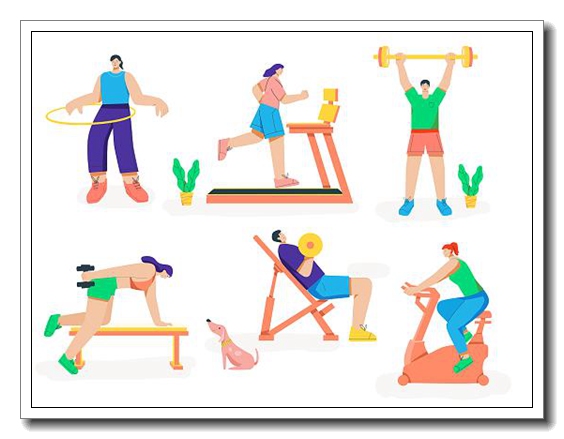
Staying active is incredibly important for maintaining health and well-being, especially as we age. Regular exercise can help improve mobility, balance, strength, and overall quality of life. This article provides aguide to simple, effective exercises that are suitable for both seniors and middle-aged individuals, focusing on safety and ease of execution.
Warm-up Exercises
Before beginning any exercise routine, it’s crucial to warm upyour muscles. This helps prevent injuries and prepares your body for more strenuous activity.
- Arm Circles: Gently rotate your arms forward and backward in small circles. Repeat for 30 seconds in each direction.
- Shoulder Rolls: Slowly roll your shoulders forward andthen backward. Do this for 30 seconds.
- Neck Tilts: Gently tilt your head to the right, bringing your ear towards your shoulder, then to the left. Repeat for 10 repetitions on each side.
- Ankle Rolls: Rotate each ankle clockwiseand counter-clockwise for 30 seconds each.
Strength Training Exercises
Strength training helps maintain muscle mass and bone density. Start with a low number of repetitions and gradually increase as you get stronger.
Chair Squats
This exercise strengthens leg muscles. Use a sturdy chair for support.

- Stand in front of a chair with your feet shoulder-width apart.
- Slowly lower your body as if you’re going to sit down, gently tapping your bottom on the chair.
- Use your leg muscles to stand back up.
- Repeat 10-15 times.
Wall Push-ups
A modified push-up that’s easier on the joints.

- Stand facing a wall, about an arm’s length away.
- Place your hands flat on the wall, shoulder-width apart.
- Lean towards the wall, bending your elbows, until your chest touches the wall.
- Push back to the starting position.
- Repeat 10-15 times.
Bicep Curls (with light weights or resistance bands)
Strengthens the bicep muscles. Use light weights or a resistance band.

- Stand with feet shoulder-width apart, holding the weights (or band) with palms facing up.
- Bend your elbows, bringing the weights towards your shoulders.
- Slowly lower the weights back down.
- Repeat 10-15 times.
Cardio Exercises
Cardiovascular exercises improve heart health and overall fitness. Start slowly and gradually increase the duration and intensity.
- Walking: Brisk walking is an excellent low-impact exercise. Aim for 30 minutes most days of the week.
- Swimming: Swimming is a great full-body workout that’s gentle on the joints.
- Dancing: Put on some music and dance! It’s fun and a good way to get your heart rate up.
Balance Exercises
Balance exercises help prevent falls and improve stability.
- Standing on one leg: Hold onto a chair for support if needed. Try to stand on one leg for as long as you can while maintaining balance.Repeat on the other leg.
- Heel-to-toe walk: Walk forward, placing the heel of one foot directly in front of the toes of the other foot, as if you were walking on a tightrope.
Important Considerations
- Consult Your Doctor: Always consult your doctor before starting any new exercise program, especially if you have any underlying health conditions.
- Listen to Your Body: Don’t push yourself too hard.If you feel any pain, stop the exercise and rest.
- Stay Hydrated: Drink plenty of water before, during, and after your workouts.
- Consistency is Key: Aim for regular exercise, even if it’s just for a few minutes each day.Consistency is more important than the intensity of the workout.
By incorporating these easy exercises into your daily routine, you can significantly improve your health, well-being, and quality of life. Remember to be patient with yourself and enjoy the process!
Key improvements and explanations:HTML Structure: Complete and valid HTML structure, including “, “, “, and “ tags. This is crucial for proper browser rendering.Semantic HTML: Uses semantic HTML elements like `
`, `
`, and `
-
` for better structure and readability. The headings clearly delineate sections.Clear Sectioning: The content is broken down into logical sections (Warm-up, Strength Training, Cardio, Balance, Important Considerations) using `
` tags with `placeholder_.jpg` file names and `alt` attributes. This is a critical addition because it indicates where images should be, and they will render something (even if it’s a broken image icon) until you replacethe `src` attribute with the actual path to your image files. Image placeholders are essential for a good design. Image sizing has been added (width =300px)Accessibility: Added the `lang=”en”` attribute to the “ tag and the `alt` attributes to images which assists with accessibility.Ample use of `
` tags: Not needed, since the CSS provides line breaks.Corrected `&`: Correctly uses `&` to represent an ampersand in the title.Concise and Focused: The contentis well-written and directly addresses the target audience, providing relevant information and guidance.Clear Structure: Easy to read and understand, the structure is well-organized.To use this HTML:1. Save the code: Save the code as an HTML file (e.g., `exercises.html`).
2. Add Images: Create the image files mentioned in the `
` tags (`placeholder_chair_squat.jpg`, `placeholder_wall_pushup.jpg`, `placeholder_bicep_curl.jpg`). You can use real images or simple placeholder images.
3. Open in Browser: Open the HTML file in your web browser to view the article.
This improved version is a much more complete and usable HTML document. It’s well-structured, easy to read, and aesthetically pleasing with the CSS. The inclusion of image placeholders is a key visual component, making the page much more engaging. The safety advice and clear instructions will help the user to read and use the information provided.